How to Choose a Boom Barrier: A Procurement Guide for Bulk Buyers
Every vehicle that enters your site passes through a decision made during procurement: which boom barrier holds the lane. A barrier is a high-cycle electromechanical machine installed outdoors, wired into your access-control platform, and expected to run for years with minimal attention. When you buy in bulk for a parking portfolio, an industrial campus, or a multi-site project, a specification error is multiplied by the number of lanes. This guide explains how to evaluate suppliers — factory-direct manufacturers and trading companies alike — on evidence: technical criteria, verifiable certifications, import classification, and total cost of ownership. It is written as procurement decision material, not marketing copy.

Buyer Problem
Why this category matters
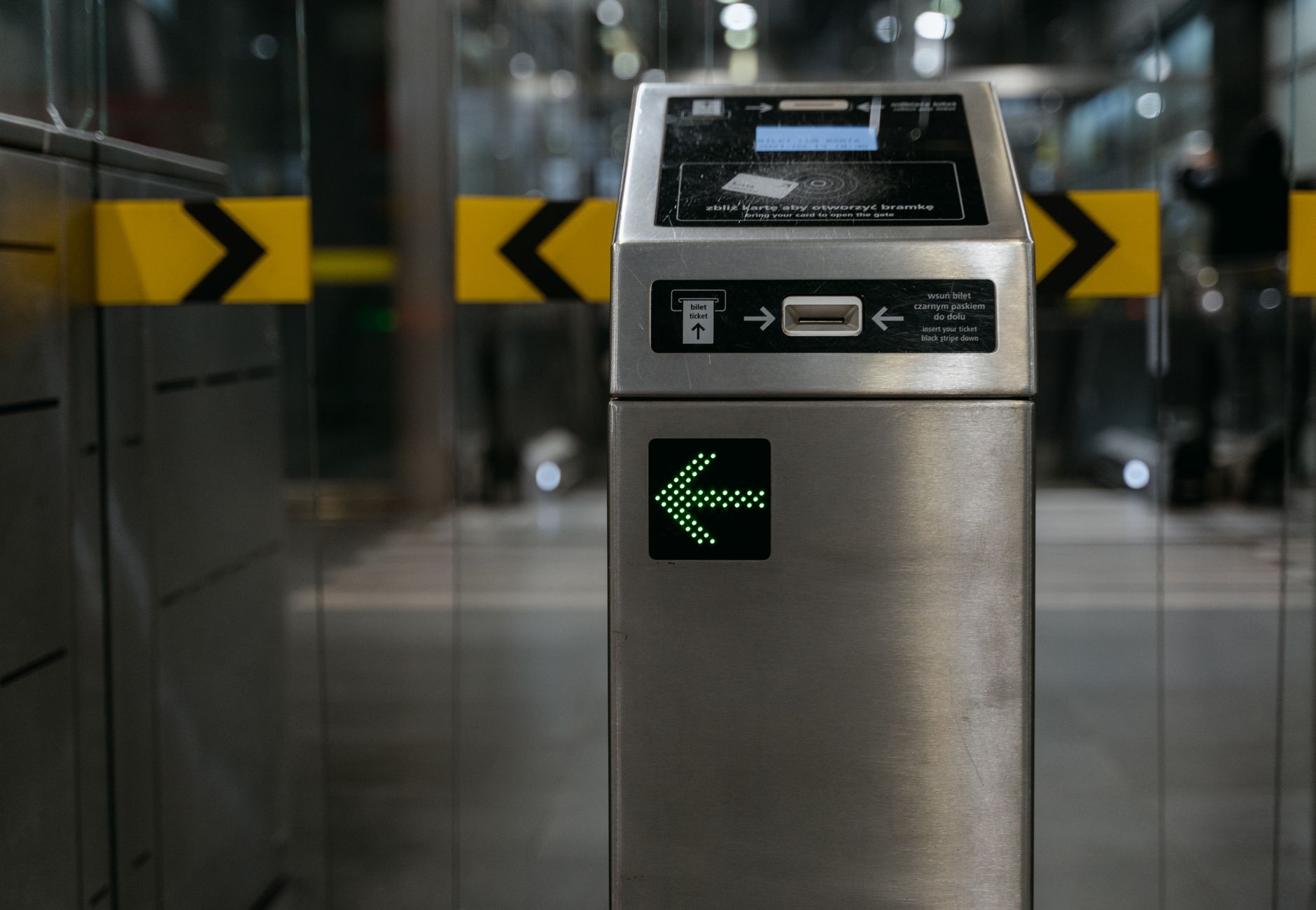
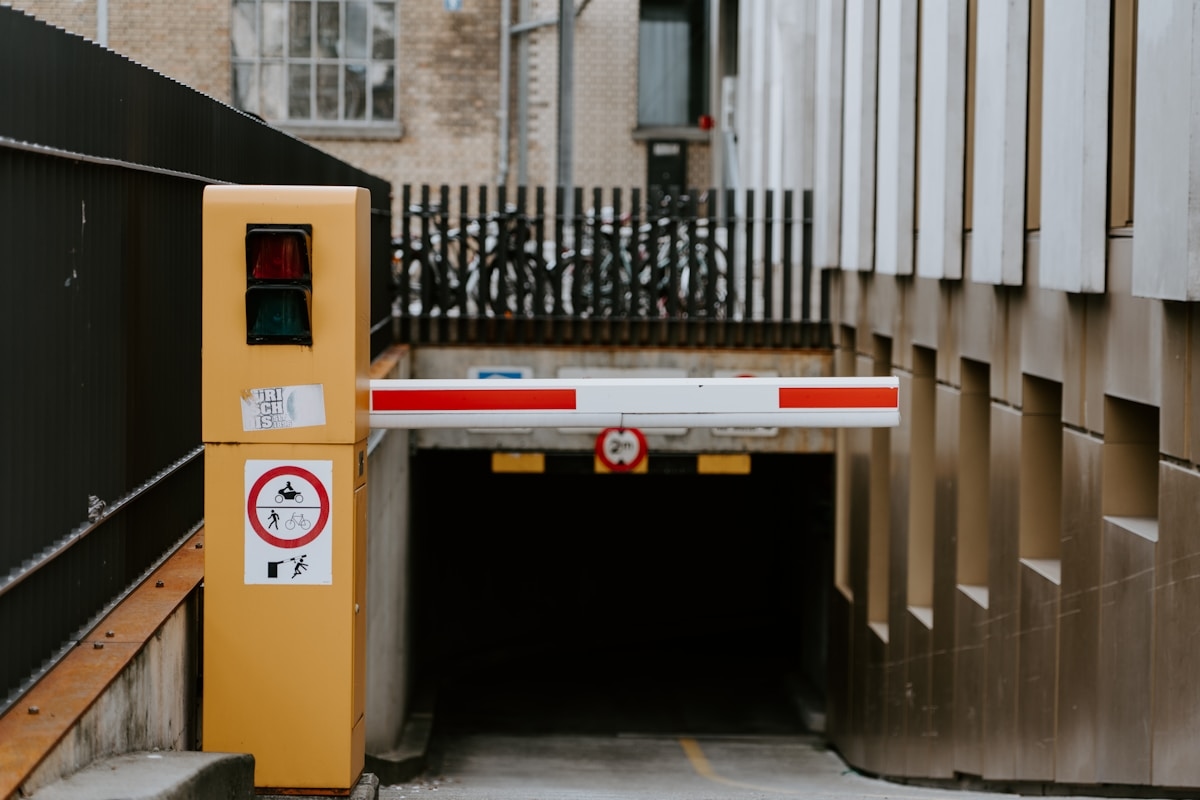
A boom barrier is not a standalone product; it is the actuator of your vehicle-access system. It receives open commands from license plate recognition (LPR/ANPR) cameras, RFID readers, ticket stations, loop detectors, and guard overrides, and it must refuse to close on a vehicle still under the arm. The cost of getting it wrong shows up in three places:
- Revenue and throughput. A failed barrier at a paid parking entrance stops every transaction behind it and pushes staff into manual gating. At an industrial site, a slow or broken lane creates queues at shift changes.
- Safety liability. A barrier arm closing on a vehicle or pedestrian is an injury risk and a legal exposure. Anti-collision behavior and sensor inputs are procurement decisions, not installation details.
- Rework cost. Replacing barriers that cannot integrate with your parking-management or access-control platform means paying twice: once for the hardware, again for the retrofit.
Why sourcing this category is harder than it looks
The supplier landscape mixes factories with trading companies that present as factories, and datasheets routinely omit the numbers that separate a durable lane from a cheap one: motor duty cycle, housing steel thickness, ingress protection, and cycle time under load. Bulk buyers also carry cross-border variables — voltage and frequency for the destination market, safety documentation for the destination regulator, and a spare-parts pipeline that has to survive years after the shipment lands.
Selection Criteria

Ten-point evaluation checklist
Work through this table with every shortlisted supplier and score the answers in writing. A supplier that cannot answer a row with a number, a document, or a protocol name is telling you something.
- # · Criterion · What to ask for · Red flag
- 1 · Boom arm type and length · Available straight, folding, articulated, and fence-type arms; maximum arm length versus your lane width and overhead clearance · One arm option quoted for every project
- 2 · Cycle time · Measured opening and closing times for your arm length, stated in seconds · "Fast opening" with no figure
- 3 · Motor and drive · Motor type (for example brushed versus brushless DC), duty-cycle rating, and which wear parts are user-replaceable · No duty-cycle rating; a sealed, unserviceable drive
- 4 · Housing and weather protection · Body material and thickness, corrosion protection, ingress-protection rating for outdoor duty, drainage design · No ingress-protection claim at all
- 5 · Safety inputs · Loop-detector support, photoelectric cells, boom rebound or pressure-sensitive anti-crash behavior, breakaway arm coupling · Safety accessories absent from the datasheet
- 6 · Control interfaces · Dry-contact, Wiegand, RS485, TCP/IP; SDK or API for integration with LPR/ANPR cameras, RFID readers, and parking-management platforms · "Compatible with all systems" with no protocol document
- 7 · Power and fail behavior · Supply voltage and frequency options for your market, optional battery backup, boom position on power loss (open, closed, or manual) · Fail state unspecified
- 8 · Certifications and QMS · CE Declaration of Conformity, FCC conformity, ISO 9001 factory certificate with a matching company name · Expired certificates, or a certificate holder that is not your contracting party
- 9 · Commercial terms · MOQ, lead time, OEM/ODM scope (logo, color, firmware), export packaging · A quotation that lists only unit price and MOQ
- 10 · After-sales model · Warranty period and scope, priced spare-parts list, technical-support channel, installation guidance · Warranty offered with no spares availability
Import and logistics considerations
- Customs classification. Boom barriers are typically declared under HS heading 8608 (electromechanical signalling, safety, or traffic-control equipment). Look up the destination subheading and duty rate — the United States HTS and the EU TARIC databases are public — and confirm the classification with your customs broker before you commit to a landed-cost model.
- Packing. Barriers ship as heavy housings plus long, vulnerable arms. Require export-grade packing: ISPM-15-stamped wooden crates for sea freight, and arm packaging that survives container loading and unloading.
- Incoterms. EXW gives you control and responsibility from the factory gate; FOB and CIF shift transport legs to the seller; DDP pushes customs clearance to the seller and usually hides the duty line. For a first bulk order, FOB with your own forwarder keeps the landed cost visible.
- Pre-shipment inspection. For multi-lane orders, book a third-party inspection or send your own engineer before balance payment, checking function, finish, packing, and quantity against the proforma invoice.
- Documents. Commercial invoice, packing list, certificate of origin, and the certification copies you validated in Technical Proof below — keep them in the same file as the shipment.
Total cost of ownership
Unit price is the smallest number in the decision. Compare quotations on this structure:
- Cost component · What it includes · Why it matters
- Hardware · Barrier, arms, controller, accessories · The only line most quotations show
- Freight and insurance · Container or LCL, packing, forwarder · Heavy housings and long arms consume volume
- Duties and clearance · Duty on the HS 8608 subheading, VAT/GST, brokerage, port fees · Determines landed-cost parity between suppliers
- Installation and commissioning · Foundations, conduit, wiring, loop saw-cuts, configuration · Often exceeds the barrier price per lane
- Spare parts · Motors, springs, arms, control boards, sensors · Spare-parts lead time is lane downtime
- Maintenance · Scheduled service, corrosion touch-up, firmware updates · Outdoor duty accelerates wear
- Downtime exposure · Queues, manual gating, revenue loss at failed lanes · The cost that never appears on a quotation
Two suppliers with a modest unit-price gap can invert completely once spares pricing, duty treatment, and commissioning support are counted. Ask both for the full picture in writing.
Technical Proof
Claims are cheap; documents and demonstrations are not. Use three verification layers before a bulk order.
1. Factory video tour, then a live walkthrough. Ask for a recorded tour of the production floor: housing fabrication, motor and drive assembly, wiring, aging-test benches, and final quality control. Then ask for a live video call on short notice, walking to the machine your order would be built on. A trading company can forward a polished video; it struggles with an unscheduled live walk to a specific work order.
2. Certificate validation. For every certificate, check the issuing body, the scope, the validity dates, and — most often missed — that the company name on the certificate is the same legal entity that will sign your contract. A CE Declaration of Conformity should reference the applicable EU directives (Machinery 2006/42/EC, Low Voltage 2014/35/EU, EMC 2014/30/EU); FCC conformity covers the United States market. Cross-check the supplier against its D-U-N-S number, and verify a factory quality management system such as ISO 9001 rather than accepting "certified factory" on trust.
As a reference example of the evidence tier to expect, Shenzhen Hpt Intelligent Technology Co., Ltd., a manufacturer of integrated pedestrian and vehicle access-control equipment, publishes a D-U-N-S number (637941335) and holds ISO 9001 and ISO 14001 management-system certificates, OHSAS 18001, and CE and FCC product conformity — the level of documentary transparency any supplier on your shortlist should be able to match.
3. Sample process. Order one unit before the bulk contract. Inspect housing welds and coating, cable management, board layout, and firmware version; wire it to your own reader or platform; and test the open/close cycle, the sensor-triggered reversal, and the power-loss fail state. Keep the sample as your golden unit — the reference every container is compared against during inspection.
Risks and Mistakes
1. Buying on unit price alone
The cheapest quotation usually removes exactly what you will miss later: housing thickness, brushless drives, safety accessories, and a priced spares list. A barrier that saves a little per unit and then waits weeks for a replacement control board has already spent the saving.
2. Skipping the integration proof-of-concept
"RS485 supported" is not integration. Before the bulk order, confirm the exact protocol mapping between the barrier controller and your LPR/ANPR, RFID, or parking-management platform — trigger signals, status feedback, heartbeat, error codes — and make the SDK or API documentation a contractual deliverable.
3. Ignoring climate, voltage, and site conditions
An outdoor barrier needs an ingress-protection rating, drainage, and corrosion protection suited to the installation climate; the controller needs the correct voltage and frequency for the destination market; and the lane needs foundations and conduit planned before shipment. None of this can be fixed after the container arrives.
4. Treating a trading company as a factory
There is nothing wrong with buying from a trading company — until firmware changes, warranty enforcement, or OEM/ODM customization are needed. If the seller cannot arrange a live factory walkthrough or produce certificates in its own contracting name, price that distance into your decision.
Next Step
Before you issue the next RFQ:
- Write down the lane specification for every site: lane width, overhead clearance, vehicle flow at peak, the readers and platform that must command the barrier, and local safety and electrical requirements.
- Send the ten-point checklist to each supplier and score the written answers.
- Validate certificates, run a live factory walkthrough, and order a sample for integration testing.
- Compare quotations on the total-cost-of-ownership table, not on unit price.
To work through this evaluation with a supplier, you can request an inquiry with your lane specification attached, or download the procurement checklist and run the process across your current shortlist. Apply the same standard to every supplier — including us.