Complete Guide to Flap Barrier Gate Systems
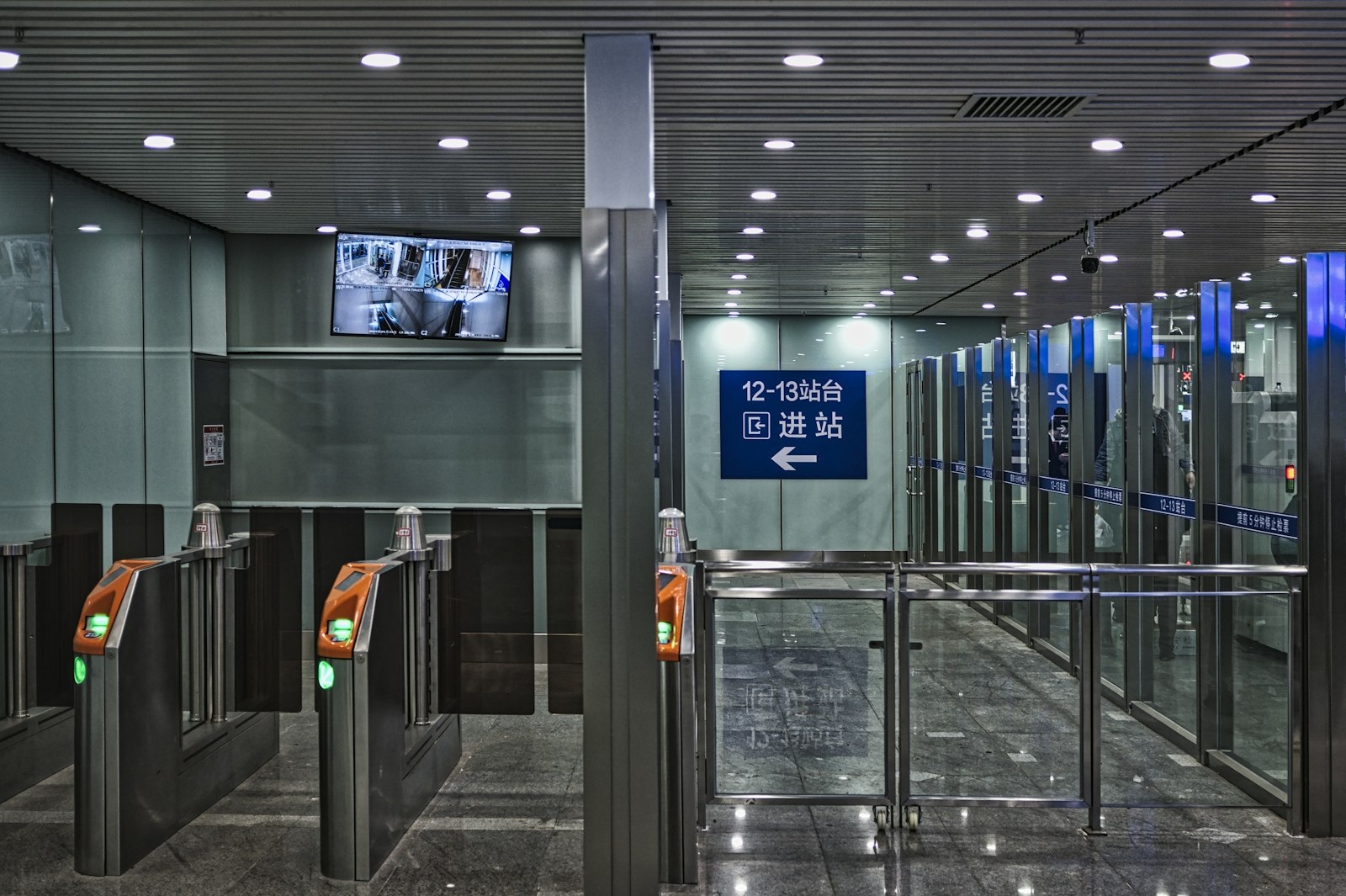
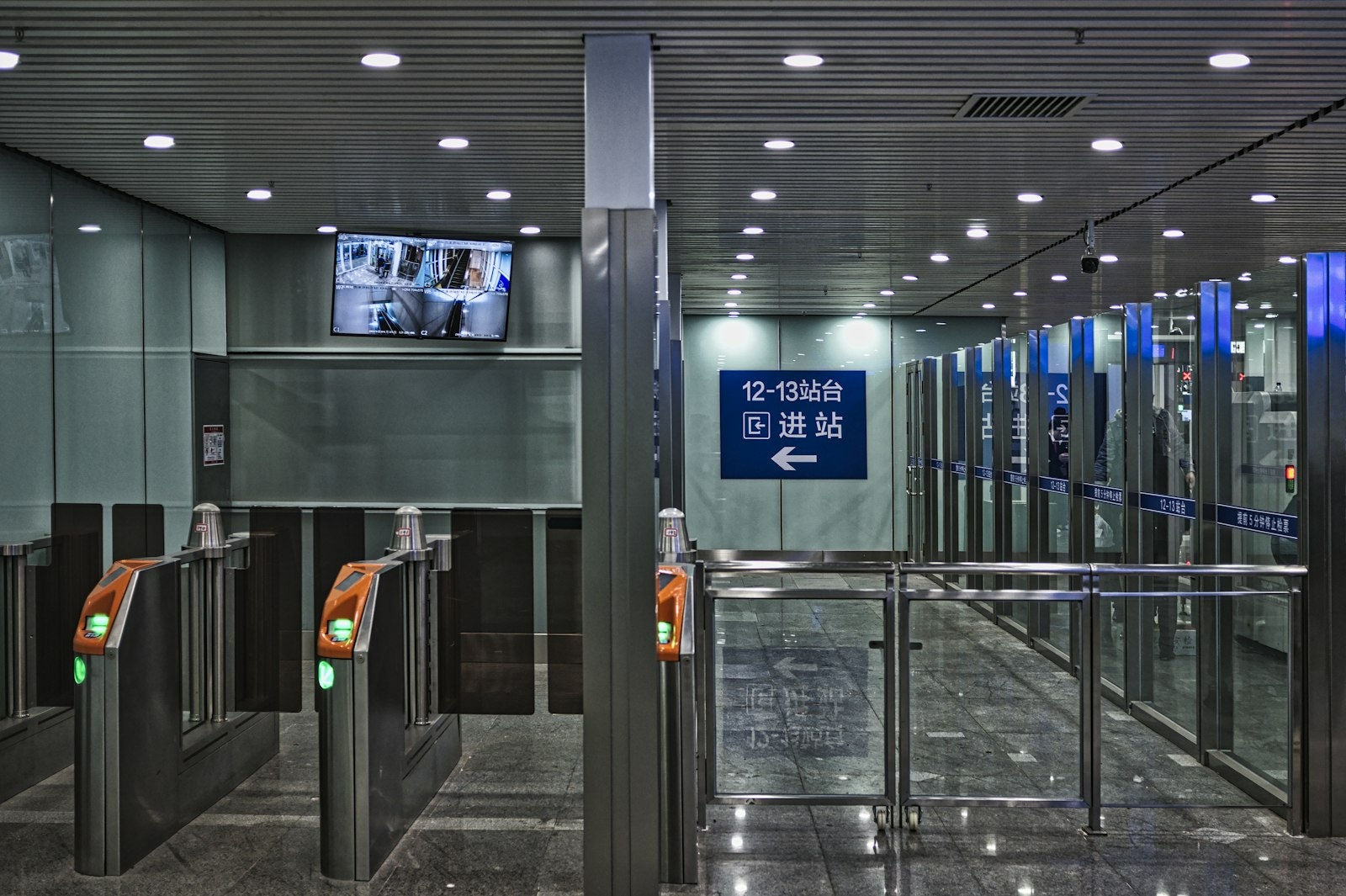
Building lobbies, corporate headquarters, and member venues ask more of an entrance than a gate that opens. The lane has to move people in both directions, stop tailgaters, accept the credentials tenants already carry, and look like part of the architecture. The flap barrier gate — motor-driven flaps that retract into the cabinet on each valid read — is the configuration most often specified where passage control and interior finish share a budget.
For purchasing managers and online retailers, the difficulty is not finding flap barriers; it is comparing them. Quotations differ in motor type, stainless grade, sensor set, and interfaces, and those differences decide integration cost and service life more than unit price does.
This guide covers the mechanism, the catalog variants, and the sourcing checks that separate dependable suppliers from expensive quotations. Every figure comes from the published listings of Shenzhen Hpt Intelligent Technology Co., Ltd., a factory-direct manufacturer of integrated pedestrian and vehicle access control; where a rating is not published — and for flap barriers, throughput is one of them — this guide says so and tells you what to demand in writing.
What a Flap Barrier Gate Is and How It Works
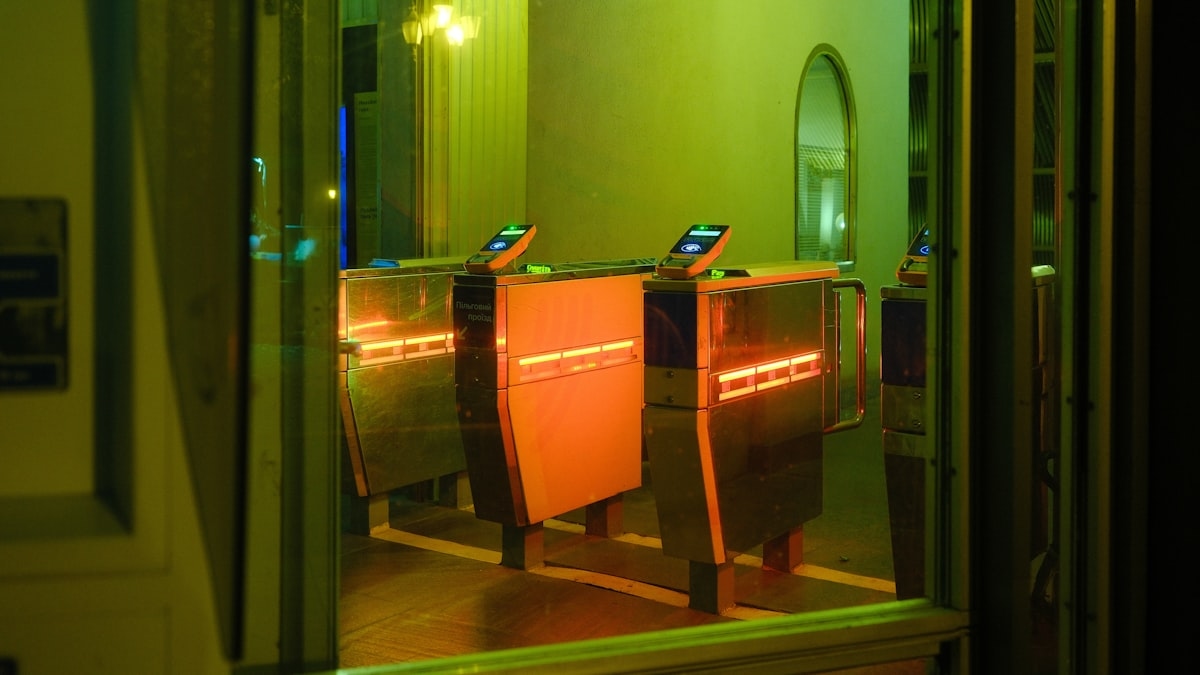
A flap barrier gate is a motorized passage lane. Cabinets house the drive, controller, and sensor array; motor-driven flaps retract into the cabinet body on a valid read, then extend to close the passage. Catalog lanes open or close within 0.2 s on brushless motors; the compact lane is listed at 0.5 s and runs 1-Way for secondary entrances, while the rest operate 2-Way.
The credential layer is modular: the multi-access lane supports RFID card, IC card, QR code, fingerprint, and face recognition in one unit, and the compact lane adds ESD integration for electronics-plant entrances. Controllers connect over TCP/IP and RS485 as standard; the speed-gate-style line adds RS-232 and dry contact for legacy panels and fire-alarm wiring.
Listed safety functions on the multi-access line are anti-pinch, anti-tailgating, collision avoidance, and counting — the four behaviors an insurer or security consultant will ask about first.
Against neighboring designs — swing barriers sweeping panels sideways, tripod turnstiles with rotating arms, speed gates with narrow glass wings — the flap barrier occupies the middle ground: contained footprint, bi-directional flow, and cabinets that finish well in visible interiors. Dimensioned drawings are on the flap barrier gate product page.
Buyer Problem
A flap barrier lane has four jobs: admit one credentialed person per validation, detect tailgating and wrong-way entry, integrate with the credential platform, and fail in a way local life-safety code accepts. Failures cluster around the same points and are expensive to fix after installation.
- Aesthetics without substance. Lanes that match the lobby but arrive without sensor documentation, interface specs, or spare parts become the most expensive furniture in the building.
- Grade ambiguity. "Stainless steel" spans grades 201, 304, and 316 in this catalog alone, with different corrosion behavior. A quotation that omits the grade is not comparable.
- Motor confusion. Brushless and brushed drives differ in service life and maintenance; one catalog line ships either. The motor type belongs in the purchase order.
- Incomplete listings. One multi-access listing leaves unit weight at 0.0 — a data gap, not a specification. Treat any blank field as a question for the supplier, not an assumption.
- Batch inconsistency. For online retailers, mixed firmware and sensor placement across shipments create two support loads instead of one stable SKU.
Flap Barrier Variants and Configurations
The catalog groups flap barrier lanes into three practical lines; the table consolidates listed specifications — confirm every figure on a countersigned datasheet at quotation.
- Catalog line · Housing, rating, dimensions · Drive, credentials, interfaces · Listed price (FOB)
- Multi-access 304/316 line (Goldantell) · Stainless steel 304 or 316, IP54, 1400x160 (300) x980 mm; anti-pinch, anti-tailgating, collision avoidance, counting · 0.2 s brushless; RFID, IC, QR, fingerprint, face; TCP/IP, RS485 · $500-1,250 per unit
- Speed-gate-style lane (Gater), single or double movement · Stainless steel (201 grade listed), IP54, 1400x160x980 mm; listed unit weight 70.0 · Brushless or brushed motor; RFID, QR, face; RS-232, RS485, TCP/IP, dry contact · $550-770 per piece
- Golden compact lane (HPT) · Stainless steel and painted steel, IP45, 350x282x1000 mm; 1-Way; listed unit weight 55.0; yellow or silver finish · 0.5 s brushless; ESD, IC, QR, RFID; RS485, RS-232, TCP/IP · $515-550
Three details differentiate these lines. First, material: the multi-access line offers 316 stainless — the grade to specify where humidity, salt, or chloride exposure is part of the site condition — while the speed-gate-style line lists 201 and the compact line pairs stainless with painted steel. Second, configuration: the speed-gate-style lane comes in single- or double-movement form with a choice of brushless or brushed motor and the widest interface set in the catalog, adapting to both new TCP/IP platforms and legacy dry-contact panels. Third, footprint: the compact lane fits a 350 mm-wide cabinet where a full 1400 mm cabinet cannot, trading bi-directional flow for a 1-Way, 0.5 s cycle.
Listed lead times are 15 for 1-10 units on the multi-access line, 7 for 1-10 pieces on the speed-gate-style lane, and 7 for 1-50 pieces on the compact lane. MOQ is quoted per model — confirm MOQ, lead time, and unit weight in writing before committing a program. The brand names across these listings (Goldantell, Gater, HPT) come from one manufacturer, reflecting the naming flexibility behind its OEM and ODM program.
Selection Criteria

Score every quotation against these criteria before comparing unit prices.
- Stainless grade, in writing. 201, 304, and 316 all appear in the catalog. Match the grade to the environment — 316 where corrosion exposure is real, 304 for dry interiors — and record it on the PO.
- Protection level. IP54 is listed on the full-height lines; the compact lane lists IP45. Match the rating to the entrance location and note it on the datasheet.
- Motor type. The speed-gate-style lane ships with either brushless or brushed motors. Lock the type, drive voltage, and spare-motor availability into the contract.
- Movement and direction. Single or double movement, 1-Way or 2-Way: these change flow and cabinet count — confirm the layout drawing before ordering.
- Interface set. TCP/IP and RS485 are standard; RS-232 and dry contact appear on the speed-gate-style lane. Map interfaces against your access platform and fire-alarm panel before delivery, not after.
- Credential coverage. The multi-access line supports RFID, IC, QR, fingerprint, and face in one lane; the compact lane trades biometrics for ESD integration. List the credentials you will run in year one and three.
- Throughput, in writing. No flap line in the catalog publishes a rated pass rate. Confirm rated capacity, dimensions, and throughput with the supplier in writing for the exact model and credential mix before ordering.
- Weight and floor loading. Listed unit weights include 70.0 on the speed-gate-style lane and 55.0 on the compact lane; the multi-access listing leaves weight at 0.0. For lobby slabs and raised floors, obtain crated and operating weights and have them checked.
Technical Proof
Buy against documents, not claims. The manufacturer holds ISO 9001, ISO 14001, and OHSAS 18001 management-system certifications, CE and FCC conformity for export markets, CCC and CQC certifications, and National High and New Technical Enterprise plus SRDI recognitions; it is DUNS-registered under 637941335. Ask for certificate numbers, scope, and validity dates — not just the logo — and verify them with the issuing body.
Require a countersigned datasheet reproducing the figures in this guide — 0.2 s or 0.5 s open/close, IP54 or IP45, the stainless grade, dimensions, and unit weight — and adding what the listing does not carry: rated throughput, working temperature, and power input. A datasheet the supplier will not sign is a claim, not a specification.
Then test before you scale: request a sample lane, run it with your own credentials and controllers, then release the full order. The manufacturer supports this with project customization, API integration, installation guidance, and technical support — capabilities you can verify on a sample unit faster than on any certificate.
Risks and Mistakes
- Leaving the stainless grade unspecified. With 201, 304, and 316 all in the catalog, an ungraded "stainless steel" quotation is an unpriced corrosion risk.
- Accepting either motor. Where a line ships brushless or brushed, the cheaper variant often wins by default. Decide on maintenance strategy, not price.
- Deploying the compact lane outdoors. It lists IP45 against IP54 on the full-height lines; the cabinet material pairs stainless with painted steel. Match rating to exposure.
- Assuming throughput from the form factor. Flap barriers resemble speed gates, but no rated pass rate is published for these lines — obtain the tested figure in writing.
- Skipping the fail-safe review. Behavior on fire alarm and power loss is a code question; the dry-contact interface on the speed-gate-style line exists for this — wire it into the review, not the punch list.
- Ignoring blank fields. A listing that shows 0.0 weight or omits MOQ is telling you where the quotation needs work. Fill every gap before signing.
FAQ
How fast does a flap barrier gate open? Catalog flap lanes open and close within 0.2 s on brushless motors; the compact one-way lane lists 0.5 s.
What is the difference between 304 and 316 stainless flap barriers? Both are listed on the multi-access line. 316 offers higher corrosion resistance for humid, coastal, or chloride-exposed sites; 304 suits dry interior installations. Specify the grade in the purchase order.
Can flap barrier gates be used outdoors? The full-height lines list IP54 protection and outdoor use in their titles; the compact lane lists IP45 and pairs stainless with painted steel, making it better suited to covered or interior locations.
What are the lead time and minimum order quantity? Listed lead times run from 7 (1-10 pieces, or 1-50 pieces on the compact lane) to 15 (1-10 units on the multi-access line). MOQ varies by line — confirm both at quotation.
Next Step
Compare your shortlist against the criteria above, then move from paper to hardware. Request a sample lane for evaluation and a countersigned datasheet for the exact model you intend to order, including the throughput, temperature, and power figures the listing does not publish; download the procurement checklist to run the same review on competing quotations. For customization — finish, branding, movement configuration, or interfaces — review the OEM and ODM options before the specification is frozen.
Start on the contact page: Shenzhen Hpt Intelligent Technology Co., Ltd. responds with model-level specifications, certification documents, and quotation terms, so evaluation begins with verifiable data, not a price list.