Complete Guide to Speed Gates: Variants, Specs and Sourcing
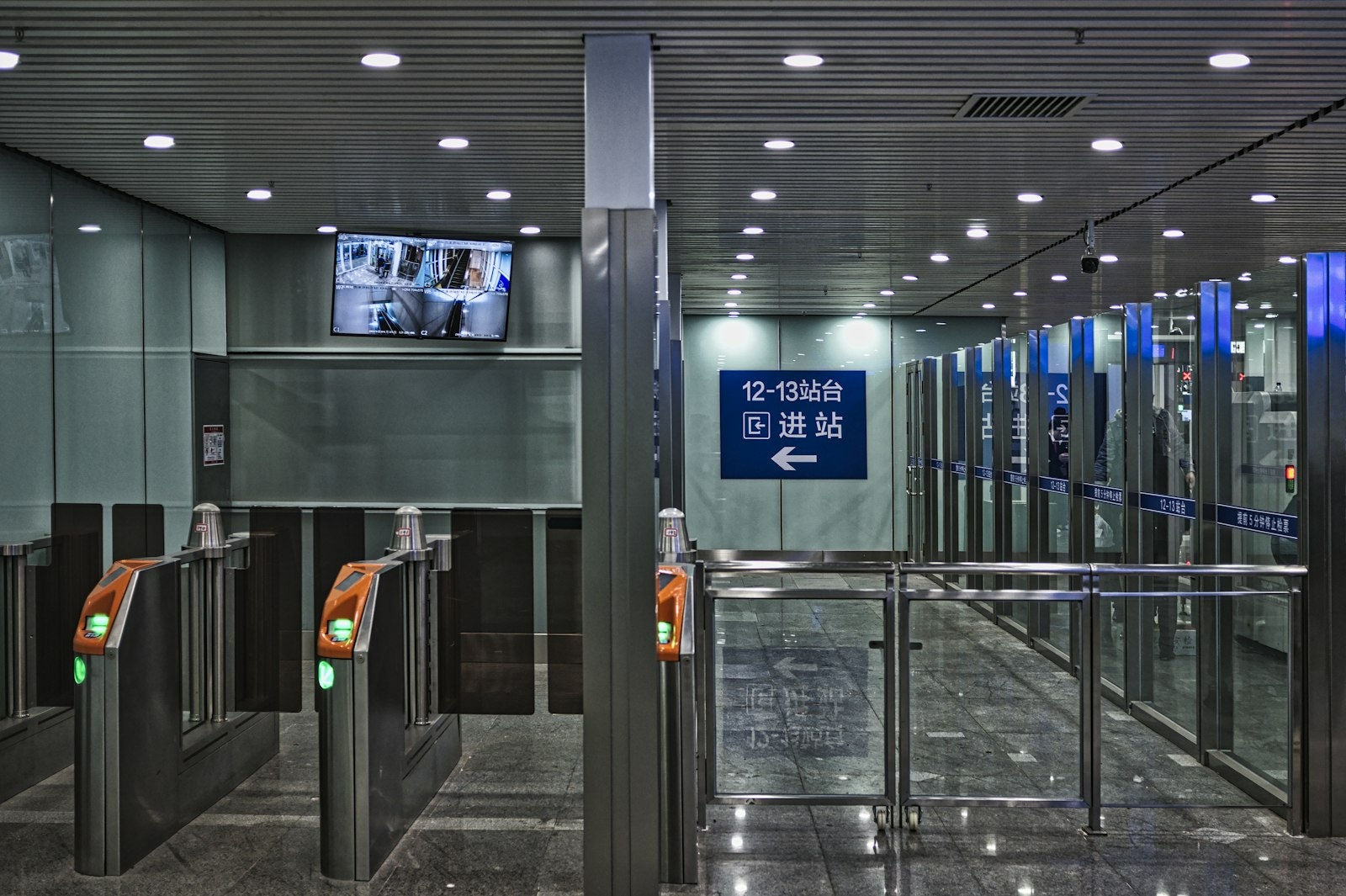
A speed gate is the lane a building installs when arriving crowds cannot be allowed to queue. Motor-driven wings retract into a stainless pedestal, a sensor array confirms that one person crosses per credential, and the lane closes again within a fraction of a second. Corporate lobbies, member gyms, libraries and metro concourses buy speed gates for this combination of flow and discipline.
The difficulty is that speed gates photographed from the front look nearly identical while their specification sheets do not. Two lanes with a similar footprint can differ in motor class, sensor density, passage width and listed price. This guide works through the catalog of Shenzhen Hpt Intelligent Technology Co., Ltd., a factory-direct manufacturer in Guangdong, China, producing integrated pedestrian and vehicle access control under ISO 9001-certified quality management. It compares variants, isolates the specifications that change real performance, and closes with the checks to complete before a purchase order.

Buyer Problem
Three problems recur in speed gate procurement.
The first is peak flow. When arrival rates exceed a lane's rated throughput, the queue moves to the gate itself, and security staff manage a crowd instead of verifying credentials. Rated throughput here spans 25-30 persons per minute on the compact lane, 40-60 on the swing-barrier family, and 45-60 on the metro-grade lane, so size against the published rating of the exact model, not the family.
The second is detection quality. A speed gate earns its premium over simpler barrier types through sensing. The metro-grade lane monitors 32 infrared beam paths per lane to separate one person from two walking together; the compact variant carries 5 pairs of active infrared intrusion detectors. Both are sold as anti-tailgating designs, but their coverage under crowd pressure differs.
The third is commercial opacity. Within one factory catalog, listed FOB prices span $395-450 for an economy stainless lane and $1,050-1,300 for a high-end swing-barrier unit. MOQs run from 1 to 20 pieces by model, and published lead times run from 7 days for a 1-10 piece order to 25 days for a 51-100 piece order. Without a fixed comparison grid, quotations cannot be normalized, and the lowest bid tends to win for reasons unrelated to the entrance's duty.
Speed Gate Variants and Where They Fit
Compact Brushless Lane (HPT-BZ-1110)
The entry model is a slim cabinet with a 168 mm profile, driven by a DC 24V brushless motor on AC 220V 50Hz input, in a SUS 304 stainless steel housing. The channel width is 900 mm, the rated passing speed is 25-30 persons per minute, and the barrier open/close time is 0.2 s. Voice broadcasting and an indicator guide users; functions cover anti-pinch, anti-tailgating, collision avoidance and passage counting. The lane reads face, fingerprint, IC card, QR code and RFID credentials plus ESD systems over RS-232, RS485 or TCP/IP, in bi-directional or single-direction configuration, across a working range of -20°C to +70°C. The listing carries an MOQ of 1 piece on FOB terms, lead times of 7 days for 1-10 pieces and 15 days for 11-200 pieces, and a listed price of $600-700 per piece.
Servo-Driven Lane for Libraries, Gyms and Offices (AG-TX68162302)
The member-facility variant pairs a brushless servo motor with a 304 stainless steel and acrylic housing on a steel frame, measuring 1600 x 231 x 980 mm. Its double-door passage of 1200 mm is the widest documented lane in the catalog. Rated throughput is 40 persons per minute with a 0.2 s reacting time, and the listing quotes an MCBF (mean cycles between failures) of 1,000,000 cycles — a durability figure worth demanding from any competing bid. Power input is AC 220V 50Hz; the working environment spans -20°C to +70°C. The listing carries an MOQ of 20 pieces, lead times of 7 days for 1-10 pieces and 15 days for 11-200 pieces, and a listed price of $500-700.
Metro-Grade Lane
The transit-class unit is the reference point for heavy duty. The pedestal measures 2000 x 200 x 1000 mm in SUS 304 stainless steel at 2.0 mm thickness, monitored by 32 infrared beam paths per lane. Throughput is rated at 45-60 persons per minute with a 0.2 s reaction time on a DC 24V 6.25A servo drive. Passage width is 600 mm standard, customizable from 600 mm to 900 mm, in single-direction or bi-directional configuration, over -20°C to +70°C. The listing carries an MOQ of 20 pieces, lead times of 15 days for 1-20 pieces, 20 days for 21-50 pieces and 25 days for 51-100 pieces, and a listed price of $900-1,200.
Swing-Barrier Speed Gates
The largest family pairs a single-wing pedestal of 1500 x 150 x 980 mm with a 600 mm standard passage, customizable from 600 mm to 900 mm, and a throughput rating of 40-60 persons per minute on brushless DC or servo drives, in SUS 304 stainless steel on a steel frame with voice broadcast and LED indication. Listed prices step from $395-450 for a 1.5 mm economy build, through $600 and $750 single-price listings, up to $1,050-1,300 for servo-driven building-entrance units; MOQs on most listings are 1 or 2 pieces. The compact AG-TX65151202 measures 1500 x 120 x 1000 mm with a double-door passage of up to 600 mm, carries 5 pairs of active infrared intrusion detectors, accepts AC 110-220V ±10% input, and is listed for indoor or outdoor use from -20°C to +70°C at $400-700 per piece.
- Variant · Motor · Rated throughput · Passage width · Listed FOB price
- Compact lane (HPT-BZ-1110) · DC 24V brushless · 25-30 p/min · 900 mm channel · $600-700
- Servo lane (AG-TX68162302) · Brushless servo · 40 p/min · 1200 mm double door · $500-700
- Metro-grade lane · Servo, DC 24V 6.25A · 45-60 p/min · 600 mm (600-900 mm custom) · $900-1,200
- Swing-barrier family · Brushless DC or servo · 40-60 p/min · 600 mm (600-900 mm custom) · $395-450 to $1,050-1,300
Selection Criteria
Score every speed gate quotation against the same points.
Throughput rating. Require the published passes-per-minute figure for the exact model, not the family. In this catalog that figure is 25-30, 40, 40-60 or 45-60 persons per minute depending on the lane.
Motor and drive. Brushless DC motors suit standard office duty; brushless servo drives suit continuous cycling at transit volumes. Confirm the drive voltage — DC 24V on the compact and metro units — and the site power input: AC 220V 50Hz on most listings, AC 110-220V ±10% on the compact AG-TX65151202.
Sensor density. Ask for the beam count or detector-pair count in writing. Thirty-two beam paths per lane is the transit-grade figure here; 5 detector pairs is the compact figure. Sensor density, not cabinet styling, is the anti-tailgating specification.
Passage width and accessibility. A 600 mm standard lane handles routine traffic. Wheelchairs, luggage and delivery carts need the 600-900 mm custom range or the 1200 mm double-door passage.
Housing and environment. SUS 304 stainless steel on a steel frame is the baseline. The metro unit specifies 2.0 mm thickness; an economy build lists 1.5 mm. Working temperatures span -20°C to +70°C.
Credentials and interfaces. The catalog reads ESD systems, face, fingerprint, IC card, QR code and RFID credentials over RS-232, RS485 and TCP/IP. Match the exact set for the quoted model against your access platform, and confirm API integration support before ordering.
Commercial terms. MOQs range from 1 to 20 pieces by model; published lead times range from 7 to 25 days; terms are FOB from Guangdong. Confirm warranty duration and spare-part supply in writing.
Technical Proof
The metro-grade lane shows what a verifiable specification sheet looks like.
- Specification · Metro-grade lane
- Footprint · 2000 x 200 x 1000 mm
- Housing · SUS 304 stainless steel, 2.0 mm thickness
- Sensing · 32 infrared beam paths per lane
- Rated throughput · 45-60 persons per minute
- Reaction time · 0.2 s
- Passage width · 600 mm standard, 600-900 mm customizable
- Drive · Servo motor, DC 24V 6.25A
- Working temperature · -20°C to +70°C
- Credentials · ESD, face, fingerprint, IC card, QR code, RFID
- Interfaces · RS-232, RS485, TCP/IP
- Direction · Single-direction or bi-directional
- MOQ / lead time · 20 pieces / 15 days (1-20), 20 days (21-50), 25 days (51-100)
- Terms / price · FOB / $900-1,200
The servo-driven AG-TX68162302 additionally documents an MCBF of 1,000,000 cycles, and the compact AG-TX65151202 documents its 5 detector pairs and AC 110-220V ±10% input. Each of these numbers can be attached to a purchase order as an acceptance criterion.
On the manufacturer side, Shenzhen Hpt Intelligent Technology Co., Ltd. holds ISO 9001 (quality management) and ISO 14001 (environmental management) certifications, OHSAS 18001 for occupational health and safety, CE and FCC product certifications, and CCC and CQC certifications for the domestic market. The company is Dun & Bradstreet registered under DUNS 637941335, is recognized as a National High and New Technical Enterprise and an SRDI enterprise, and holds an intellectual-property management system certification. Production is factory-direct, with OEM/ODM customization, project customization, API integration, installation guidance and technical support. Ask for certificate copies matched to the exact model quoted, the batch inspection report, and written warranty terms with every bid.
Risks and Mistakes
Comparing by photo instead of beam count. Visually similar lanes can differ between 32 beam paths and 5 detector pairs. For transit and event traffic, beam count is the anti-tailgating specification. Get it in writing before shortlisting.
Mismatching power. Most listings specify AC 220V 50Hz input; the compact AG-TX65151202 accepts AC 110-220V ±10%; drive circuits run on DC 24V. Confirm site voltage against the quoted configuration before planning cabling.
Assuming every lane suits outdoor exposure. Only the AG-TX65151202 listing states indoor or outdoor operation. Other models publish a -20°C to +70°C working range but no ingress-protection rating. For exposed entrances, confirm the protection level in writing.
Ignoring MOQ and lead-time tiers. The metro-grade lane requires an MOQ of 20 pieces and takes up to 25 days at 51-100 pieces, while several swing-barrier listings accept an MOQ of 1 piece on a 7-day lead time for 1-10 pieces. A phased rollout that ignores these tiers either misses the supplier minimum or stalls the installation window.
Leaving warranty and spares undefined. Warranty terms vary by listing. Confirm coverage duration, included parts and the support channel before the deposit.
FAQ
How many people can pass a speed gate per minute? In this catalog: 25-30 on the compact lane, 40 on the servo-driven double-door lane, 40-60 on the swing-barrier family, and 45-60 on the metro-grade lane.
What lane width should I order? 600 mm is the standard passage. Order the 600-900 mm custom range or the 1200 mm double-door passage for wheelchairs, luggage or carts.
Which credentials and interfaces are supported? Face, fingerprint, IC card, QR code, RFID and ESD systems, over RS-232, RS485 and TCP/IP. The exact set varies by listing, so verify it for the model quoted.
What are the MOQ and lead times? MOQs run from 1 to 20 pieces by model. Lead times start at 7 days for 1-10 pieces on most models and reach 25 days for 51-100 pieces on the metro-grade lane.
Can speed gates be installed outdoors? One compact model is listed for indoor or outdoor use with a -20°C to +70°C working range. For other models at exposed entrances, confirm the ingress-protection rating in writing.
Next Step
Validate before you scale. Request a sample of the model whose throughput, passage width and power input match your site, and run it through a real peak period with your own credential system before committing to the multi-lane order. Meanwhile, download a procurement checklist covering motor type, beam count, passage width, interfaces, certifications, MOQ, lead time and warranty.
The full speed gate product line lists current models, with OEM/ODM customization for branded deployments and lower-throughput alternatives such as the tripod turnstile line for perimeter doors. Send your peak-traffic figures, lane dimensions and access platform details through the contact page, and the factory engineering team will confirm the correct model, MOQ and lead time.