Complete Guide to Swing Barrier Gate Systems
Every entrance project converges on one line item: the pedestrian lane. Security wants one credentialed person per passage. Facilities want a wide, accessible opening. Procurement wants lanes that arrive on schedule, connect to the existing badge or ticketing platform, and stay serviceable for years. The swing barrier gate answers all three at once.
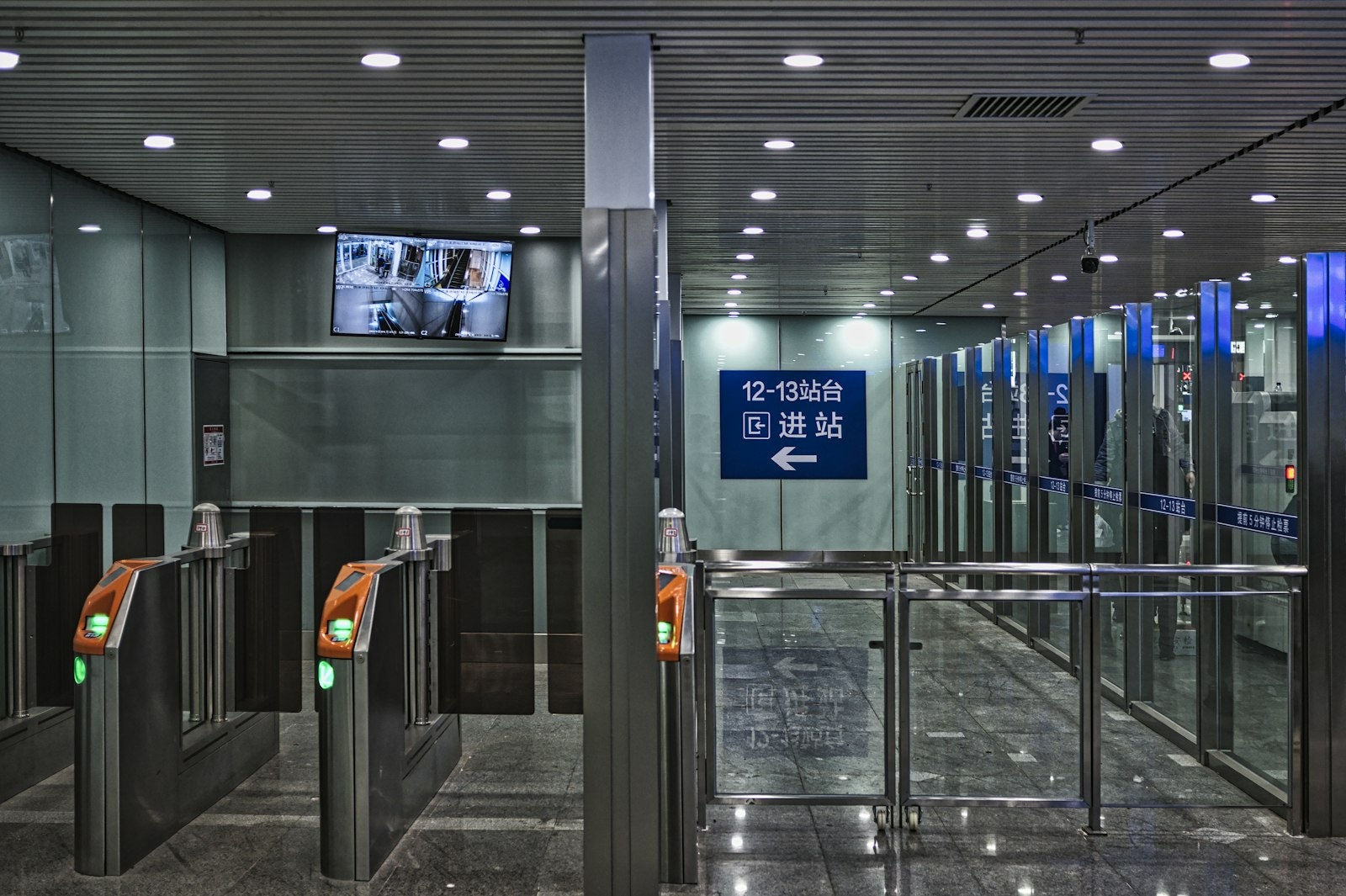
A swing barrier gate sweeps motor-driven panels into the cabinet on a valid read, leaving the passage clear. Because the open lane is unobstructed, it admits wheelchairs, delivery carts, and luggage that tighter turnstile geometries restrict — hence its use across offices, factories, stadiums, supermarkets, and residential developments.
This guide covers the mechanism, the catalog variants with their listed specifications, and the sourcing checks that separate dependable suppliers from expensive quotations, written for purchasing managers and online retailers. Every figure comes from the published listings of Shenzhen Hpt Intelligent Technology Co., Ltd., a factory-direct manufacturer of integrated pedestrian and vehicle access control; where a rating is not published, this guide says so and tells you what to demand in writing.
What a Swing Barrier Gate Is and How It Works
A swing barrier gate is an electromechanical passage-control lane. Cabinets house the drive, controller, and infrared sensor array; panels rotate into the cabinet on a valid read and close behind the pedestrian. Catalog lanes open or close within 0.2 s on brushless DC drives. The fast-speed stadium lane runs a DC 24 V brushless motor on an AC220V supply, while one optical supermarket lane lists 2~3 s on a brushed DC motor.
Operation is bi-directional (2-Way) as standard; the SUS 304 lines also list single-directional access. Safety functions on extended lines: anti-pinch, anti-tailgating, collision avoidance, and counting, with IR sensors and acoustic plus LED indication on the stadium lane.
The credential layer is separate from the mechanism, which is what makes the lane integrable. Catalog lines accept RFID card, IC card, QR code, fingerprint, and face recognition, with ESD integration on extended lines for electronics plants. Controllers connect over RS485 as standard, with RS-232 and TCP/IP on extended lines and dry contact on the SUS 304 lanes for legacy panels and fire-alarm wiring.
Against neighboring designs — flap barriers with vertically retracting fins, tripod turnstiles with rotating arms — the swing geometry offers the widest, most accessible passage, at 550 mm and 600 mm access widths by model. Full dimensioned drawings are on the swing barrier gate product page.

Buyer Problem
A swing barrier lane has four jobs: admit one credentialed person per validation, detect and alarm on tailgating or wrong-way passage, integrate with the credential platform, and fail in a way local life-safety code accepts. Failures cluster around those jobs, and the cost lands in concrete, cable, and downtime.
- Rework. Lanes bolt to finished floors with conduits beneath; the wrong width, handing, or interface means reopening flooring while the entrance runs on manual control.
- Integration mismatch. A gate supporting only one protocol, or arriving without documentation for your platform, turns a hardware purchase into a software project.
- Inconsistent batches. Mixed orders with different sensor placements and firmware versions behave differently lane to lane and double the spare-parts inventory.
- Unverifiable claims. Quotations citing "IR sensors" and "stainless steel" without counts, grades, or thicknesses are difficult to compare and enforce later.
For online retailers, resale adds a constraint: documentation, stable firmware, and spares must exist for every SKU listed, not just the first shipment.
Swing Barrier Variants and Configurations
The catalog spans compact outdoor lanes to fast-speed stadium lanes; the table consolidates listed specifications — treat it as a baseline and confirm each figure on a countersigned datasheet.
- Catalog line · Housing, rating, dimensions · Drive and interfaces · Listed price (FOB)
- Compact outdoor smart lane · Metal housing, IP54, 1400x160x980 mm · 0.2 s brushless; face, QR, RFID; RS485 · $195-210
- SUS 304 standard lane (AG-PX36121802) · SUS 304, 1200x185x980 mm; access width 550 mm (600 mm on the companion model) · 0.2 s brushless; 30 p/m; RS-232, RS485, TCP/IP, dry contact; AC110~220V±10% · $320-350
- Golden stainless lane · Stainless steel, IP54, 1200x160x980 mm; anti-tailgating · 0.2 s brushless; RFID, IC, QR, fingerprint, face; RS485 · $365-405
- Fast-speed stadium lane (AG-TX38161502) · 304 stainless, 1600x150x980 mm; IR sensor; -20~+70°C · DC 24 V brushless; 30 p/m; RS485, RS-232, TCP/IP; AC220V · $500-700
- Optical supermarket lane (AG-PX78161003) · SUS 304, 1.2 mm top over 1.0 mm body; stand 168x1050 mm, barrier 35x500 mm; -10~50°C · Brushed DC; 25~30 p/m closed, 40 p/m open; 2~3 s; RS-232, RS485, TCP/IP; AC220±10%V · $585-710 per set
Three details differentiate these lines in practice. First, housing: the compact outdoor lane is a metal cabinet, the standard and stadium lanes are SUS 304 stainless, and only the supermarket lane publishes thicknesses (1.2 mm top, 1.0 mm body) — "stainless steel" is not a specification until grade and thickness are written down. Second, drive: the supermarket lane trades the brushless drive for a brushed DC motor, changing the maintenance profile even though its open-flow rate (40 p/m) is the highest listed. Third, logistics: listed unit weights run from 40.0 on the compact lane to 90.0 on the golden stainless lane (45.0 on the other three lines), and listed lead times from 7 to 20 by line and quantity. MOQ is quoted per model — confirm MOQ and schedule in writing.
Listings appear under both the Shenchuangtong and HPT brand names from the same manufacturer — evidence of the naming flexibility behind its OEM and ODM program.
Selection Criteria
Score every quotation against these criteria before comparing unit prices.
- Motor type. Brushless DC is the catalog standard; brushed DC appears on the supermarket lane. Lock the motor type, drive voltage, and spare-motor availability into the purchase order.
- Housing grade and thickness. Demand the stainless grade (SUS 304 where listed) and cabinet thickness in writing; for "metal" housings, confirm finish and corrosion treatment.
- Protection level. IP54 is listed on the outdoor lines; match it to actual exposure — covered exterior, wet lobby, or plant floor — and record it on the datasheet.
- Interface set. RS485 is standard; RS-232, TCP/IP, and dry contact appear on extended lines. Map interfaces against your access platform and fire-alarm panel before ordering.
- Credential coverage. RFID, IC, QR, fingerprint, face, and ESD span the catalog, but not every lane supports every credential — list the ones you will run in year one and year three.
- Passage width. Catalog access widths are 550 mm and 600 mm. If your code requires a wider accessible lane, ask which model provides it.
- Throughput, in writing. The stadium lane lists 30 p/m and the supermarket lane 25~30 p/m closed and 40 p/m open; for the other lines, obtain the tested figure for your credential mix before ordering.
- Lead time and batch consistency. Published lead times range from 7 to 20 by line and quantity; for phased projects, require firmware version and sensor placement consistency across shipments.
Technical Proof
Buy against documents, not claims. The manufacturer holds ISO 9001, ISO 14001, and OHSAS 18001 management-system certifications, CE and FCC conformity for export markets, CCC and CQC certifications, and National High and New Technical Enterprise plus SRDI recognitions; it is DUNS-registered under 637941335. Ask for certificate numbers, scope, and validity dates — not just the logo — and verify them with the issuing body.
For the product, require a countersigned datasheet reproducing the figures in this guide: 0.2 s open/close, IP54 where claimed, rated pass rate, dimensions, unit weight, power input, and working temperature (-20~+70°C stadium lane, -10~50°C supermarket lane). A datasheet the supplier will not sign is a claim, not a specification.
Then test before you scale: request a sample lane, run it with your own credentials and controllers, then release the full order. The manufacturer supports this with project customization, API integration, installation guidance, and technical support — capabilities you can verify on a sample unit faster than on any certificate.
Risks and Mistakes
- Assuming "stainless steel" means 304. One catalog line is a metal cabinet; only one publishes thicknesses. An unstated grade is an unpriced corrosion risk.
- Ignoring the motor type. Brushed and brushless drives have different service lives and maintenance loads. The supermarket lane lists a brushed DC motor; the rest list brushless. Buy the one you can support.
- Buying on unit price. The spread from $195-210 to $585-710 per set reflects drive class, sensor count, and housing, not margin alone; a cheap lane that fails integration costs more than the premium one.
- Accepting verbal throughput. Confirm rated capacity, dimensions, and throughput with the supplier in writing for the exact model and credential mix.
- Skipping the fail-safe review. Behavior on fire alarm and power loss is a code question; the dry-contact interface on the SUS 304 lines exists for this — wire it into the review, not the punch list.
- Neglecting resale documentation. Retailers should require firmware notes, spare-part lists, and installation guides per SKU before the second shipment, while leverage exists.
FAQ
How fast does a swing barrier gate open? Catalog swing lanes open and close within 0.2 s on brushless DC drives. The optical supermarket lane lists 2~3 s on a brushed DC motor.
What throughput can a swing barrier handle? The fast-speed stadium lane is listed at 30 p/m; the supermarket lane at 25~30 p/m closed and 40 p/m open. Other lines publish no rated pass rate — obtain the tested figure in writing.
Can swing barrier gates be installed outdoors? Several lines list IP54 protection and outdoor use, including the compact smart lane and the golden stainless lane. Confirm rating, siting, and shelter requirements.
What are the lead time and minimum order quantity? Listed lead times run from 7 (1-10 pieces, 1-20 units, or 1-10 sets depending on the line) to 15 or 20 for larger batches. MOQ varies by line — confirm both at quotation.
Next Step
Compare your shortlist against the criteria above, then move from paper to hardware. Request a sample lane and a countersigned datasheet for the exact model you intend to order; download the procurement checklist to run the same review on competing quotations. For customization — finish, branding, credentials, or interfaces — review the OEM and ODM options before the specification is frozen.
Start on the contact page: Shenzhen Hpt Intelligent Technology Co., Ltd. responds with model-level specifications, certification documents, and quotation terms, so evaluation begins with verifiable data rather than a price list.