Manual vs Automatic Tufting in Indonesia — Cost Comparison for Brush Factories
Manual vs Automatic Tufting in Indonesia — Cost Comparison for Brush Factories
The Two Production Models
Indonesian brush factories operate on a spectrum between fully manual and fully automatic tufting. The choice between these models directly impacts production cost per unit, quality consistency, scalability, and the factory's ability to serve export markets.
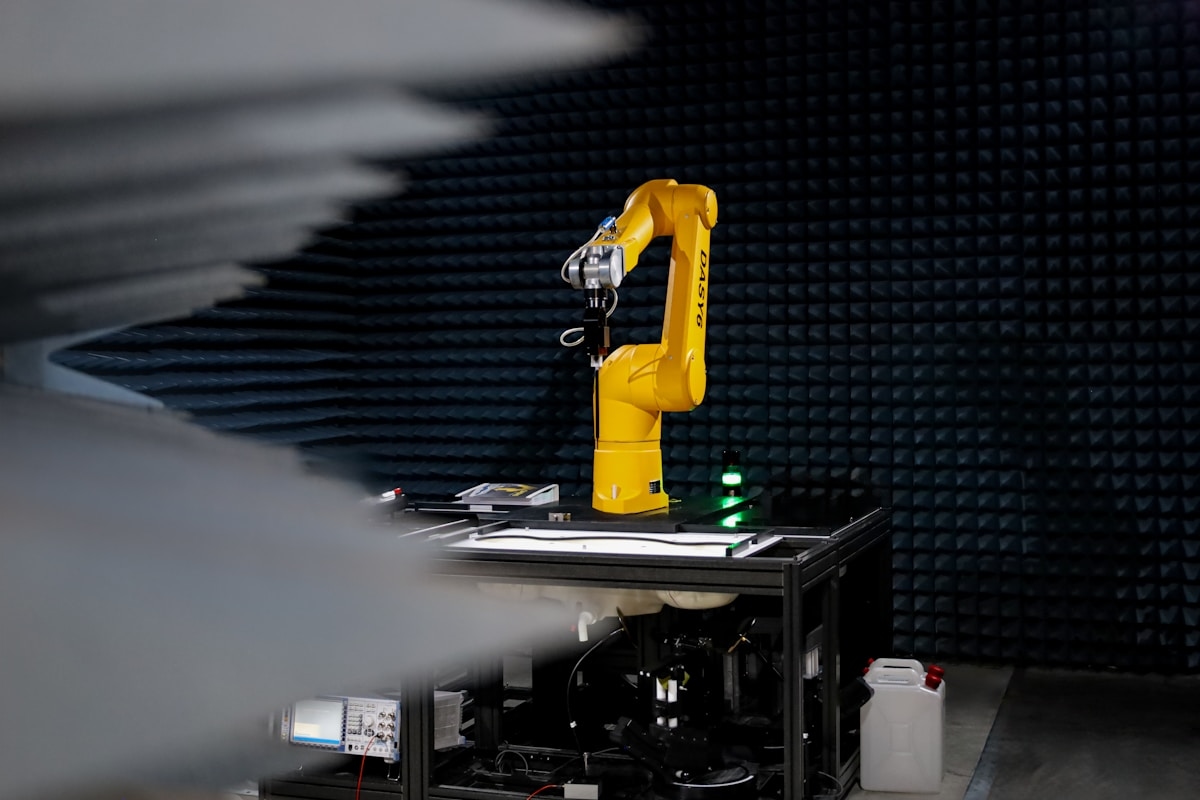
Manual tufting stations rely on skilled operators who insert bristles into pre-drilled brush heads by hand or with semi-automatic assistance. Automatic CNC tufting machines perform the same process with computer-controlled precision, eliminating operator variability and dramatically increasing throughput.
Cost per Unit Comparison
For an Indonesian factory producing standard toothbrushes at 300,000 units per month:
- Cost Factor · Manual Tufting · Automatic CNC Tufting · Difference
- Operators per shift · 35 persons · 6 persons + 2 supervisors · -77%
- Monthly labor cost (IDR) · Rp 126,000,000 · Rp 35,000,000 · -72%
- Defect rate · 6-8% · 0.5-1% · -87%
- Monthly rework cost (IDR) · Rp 54,000,000 · Rp 7,500,000 · -86%
- Electricity (IDR/month) · Rp 9,000,000 · Rp 18,000,000 · +100%
- Maintenance (IDR/month) · Rp 3,600,000 · Rp 5,400,000 · +50%
- Total operating cost (IDR/month) · Rp 192,600,000 · Rp 65,900,000 · -66%
- Cost per 1000 brushes (IDR) · Rp 642,000 · Rp 220,000 · -66%
Capital Investment Required
Manual Station Setup
A manual tufting station costs approximately Rp 45-120 million per position depending on quality. For a factory needing 35 stations to produce 300,000 brushes per month:
- 35 manual tufting stations × Rp 80 million average: Rp 2.8 billion
- Training time per operator: 3-6 months to reach full productivity
- Ongoing recruitment costs: High (annual turnover 30-50%)
Automatic CNC Setup
A complete automatic line serving the same volume:
- Equipment · Estimated Cost (FOB Shenzhen) · IDR Equivalent
- 3-axis CNC tufting machine · $32,000 · Rp 500 million
- Automatic drilling machine · $18,000 · Rp 280 million
- Trimming machine · $10,000 · Rp 155 million
- Flagging machine · $12,000 · Rp 185 million
- Shipping, customs, installation · $8,000 · Rp 125 million
- Total · $80,000 · Rp 1.245 billion
Return on Investment Analysis
Monthly Savings
- Category · Manual · Automatic · Savings
- Labor · Rp 126,000,000 · Rp 35,000,000 · Rp 91,000,000
- Rework · Rp 54,000,000 · Rp 7,500,000 · Rp 46,500,000
- Material waste · Rp 15,000,000 · Rp 3,000,000 · Rp 12,000,000
- Total · · · Rp 149,500,000
Payback Period: Rp 1,245,000,000 ÷ Rp 149,500,000 = 8.3 months
Quality Comparison
- Quality Metric · Manual Tufting · Automatic CNC
- Bristle height consistency · ±0.3mm · ±0.05mm
- Bristle retention rate · 88-93% · 96-99%
- Pattern accuracy · Operator-dependent · ±0.02mm
- Daily output per operator · 80-120 brushes · 400-600 brushes
- Evening/second shift quality · Degrades significantly · Consistent
Manual quality varies based on operator skill, fatigue, and experience. Automatic CNC machines maintain consistent quality regardless of shift, operator changes, or production speed.
Hidden Costs of Manual Tufting
Beyond the direct costs, Indonesian brush factories relying on manual tufting face:
- Operator training costs: New operators require 3-6 months to reach full productivity. During training, output is 40-60% of target and defect rates are 2-3× higher.
- Quality control overhead: Manual processes require 3-5× more QC inspectors to catch defects before shipping. Even then, some defective brushes reach customers.
- Export certification challenges: ISO 9001 certification requires documented quality processes. Manual tufting makes process documentation difficult because quality depends on individual operator performance rather than machine settings.
- Scaling limitations: Adding production capacity with manual stations requires finding, training, and retaining skilled operators — each step takes months. Adding automatic capacity requires purchasing and installing a machine, which takes 4-6 weeks from order to production.
Barriers to Automation for Indonesian Factories
Indonesian brush factory owners cite three main concerns about CNC automation:
- Initial capital requirement: Rp 1.2 billion for a complete line is significant for mid-sized factories. However, financing options are available, and the 8-month payback period means the machine pays for itself well within the first year.
- Technical skills gap: CNC machines require operators who understand computer-controlled equipment, not just manual brush making. Chinese manufacturers address this with 10-14 days of on-site training and ongoing remote support via video call.
- After-sales support concerns: Having the machine manufacturer in China rather than locally is a concern. Established Chinese manufacturers mitigate this through spare parts stock in Jakarta, remote diagnostics, and guaranteed response times.
Decision Framework for Indonesian Factory Owners
- If your factory: · Recommended approach
- Produces under 50K brushes/month · Manual may still be cost-effective
- Produces 50-150K brushes/month · Start with one CNC machine for your top SKU
- Produces 150-500K brushes/month · Full automation pays back in 8-12 months
- Produces 500K+ brushes/month · Multiple CNC lines are necessary for competitiveness
- Exports to demanding markets · Automation is essential for quality documentation
- Primarily serves domestic market · Automation still reduces cost and improves margin
Next Step
Indonesian brush manufacturers ready to evaluate automation should document their current production costs, defect rates, and labor expenses. Share these with a Chinese brush machinery manufacturer to receive a personalized ROI projection and machine recommendation.
Frequently Asked Questions About CNC Tufting Automation
Q: What training do my existing operators need to run a CNC tufting machine? A: Most CNC tufting machines feature touchscreen interfaces with intuitive brush design programming. Operators can be trained to proficiency within 2-3 weeks. The machine manufacturer typically provides 10-14 days of on-site training during installation, covering machine operation, basic maintenance, and troubleshooting.
Q: Can I convert existing manual brush designs to CNC programs? A: Yes. The machine manufacturer can program your existing brush designs into the CNC system. Once programmed, switching between brush designs takes under 10 minutes. This is significantly faster than retooling manual stations for different brush types.
Q: What happens if the machine breaks down? A: Established Chinese manufacturers provide remote diagnostics via video call with typical response time under 2 hours. Critical spare parts (tufting needles, sensors, belts) are shipped within 5-7 days. A first-year spare parts kit covering commonly replaced components can be included with the initial order.
Q: Is Chinese CNC machinery compatible with Indonesia's electrical system? A: Yes. Chinese manufacturers configure machines for the Indonesian standard (380V/50Hz three-phase). Voltage stabilizers are recommended in areas with grid fluctuation, and can be included in the machine configuration at minimal additional cost.
Q: What is the typical warranty period? A: Standard warranty is 12 months from the date of arrival at your factory, covering manufacturing defects in materials and workmanship. Extended warranties of 18-24 months are available on request.
Implementation Roadmap
Month 1: Planning and Order
- Document current production costs, defect rates, and labor expenses
- Select machine configuration based on brush types and volume
- Place order with 30% down payment
- Prepare factory floor space (200-300 sqm recommended for complete line)
Month 2: Manufacturing and Shipping
- Machine fabrication and testing at manufacturer's factory (25-35 days)
- Arrange ocean freight and customs clearance documentation
- Prepare electrical connection (380V/50Hz, 3-phase)
- Arrange accommodation for commissioning engineer
Month 3: Installation and Ramp-Up
- Machine arrival and customs clearance (3-7 days)
- Installation and commissioning (10-14 days with manufacturer's engineer)
- Operator training during installation period
- Graduated production ramp-up over 2-4 weeks
- First quality audit at full production
Months 4-6: Optimization
- Fine-tune machine parameters for optimal quality and throughput
- Expand production to additional brush designs
- Document quality metrics for ISO certification
- Begin planning for additional machines or line expansion
Technical Specifications Reference
Standard 3-Axis CNC Tufting Machine
- Specification · Value
- Axis travel (X/Y/Z) · 400mm × 300mm × 150mm
- Maximum brush width · 250mm
- Tufting speed · 50-70 strokes per minute
- Control system · Advantech IPC-610 or Siemens S7-1200
- Linear guides · HIWIN HGH series, precision class H
- Servo motors · Panasonic Minas A6, 750W
- Ball screws · HIWIN C5 grade, 16mm diameter
- Power requirement · 380V/50Hz, 3-phase, 4.5kW
- Machine weight · Approximately 1800 kg
- Machine footprint · 2200mm × 1600mm × 1800mm
- Safety features · Light curtain, emergency stop, interlocked guards