
Factory & Quality Control
An access control factory you can inspect before you commit
FlowGate Pro designs and manufactures pedestrian turnstile gates and vehicle access systems at a factory-direct facility in Shenzhen — with production lines, QC checkpoints, ISO9001, CE and FCC certification, and export packaging for overseas projects.
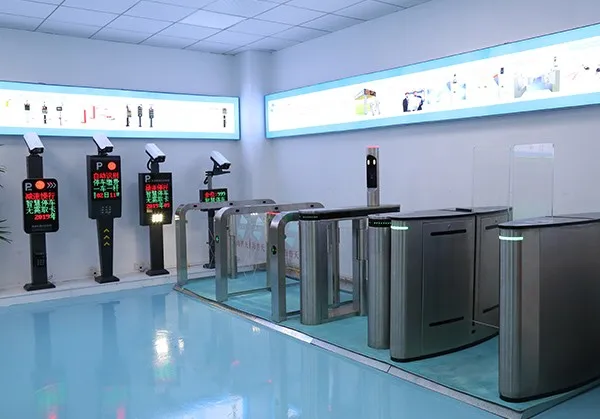
Factory Overview
Factory-direct production in Shenzhen
FlowGate Pro (Shenzhen Hpt Intelligent Technology Co., Ltd., established 2012) operates from a 12,000+ m² production facility in Shenzhen, one of China’s hardware and electronics manufacturing hubs. Because we are the factory, you deal directly with the people who build the units — there is no trading layer between you and production.
A team of 101-200 employees — including a 20+ member R&D group holding 50+ patents and IP rights — controls the product from chipset, PCB board and enclosure through semi-finished and finished units to product testing and technical support. Products are operating in more than 20 countries, with over 500,000 devices in operation, and the plant is structured around repeatable processes: standard product lines, drawing-based customization, and staged QC checkpoints.
Custom orders flow through the same lines as standard units, which keeps quality consistent and lead times predictable. See the OEM/ODM process for how a tailored order moves from drawings through production.
The facility supports both low-volume project builds and container-volume export orders. Batch sizes vary, but the process does not: the same checkpoints apply whether a run is two units or two hundred, because each unit is verified against the approved sample and the order specification rather than against a batch average.
Production is organized around standard platforms, so the plant can move between pedestrian and vehicle lines without retooling. That flexibility is what lets us quote a project-based MOQ and lead time rather than forcing every buyer into a preset minimum run.
Factory Scale & Quality Statistics
Production numbers behind every order
Production Lines
Four stages cover every unit we ship
Pedestrian and vehicle lines share the same production stages, so a speed gate and a barrier gate follow the same discipline from material to crate.
Sheet-metal & structural fabrication
Stainless steel housings, frames and panels are cut, bent and welded from 304/316 stainless to the drawing. Custom dimensions are handled at this stage.
Assembly & wiring
Drives, sensor arrays, control boards and cabling are assembled into the housing and terminated to a standard layout that is easy to service on site.
Control board & software programming
Control boards are configured with the reader types, relay logic and access profiles confirmed in the specification, then loaded with the firmware for the lane or barrier type.
Final assembly & burn-in
Complete units are aligned and run through a function burn-in cycle before they are cleared for inspection and packing.
Quality Control
QC checkpoints at every step, not just at the end
Quality is checked against the drawing and the approved sample throughout the build, so defects are caught close to where they happen.
Incoming material inspection
Stainless steel, glass, acrylic, motors, sensors and control boards are checked against the material specification when they arrive, before anything enters production.
In-process checks
Operators verify dimensions and alignment at fabrication and assembly stages using the drawing and a stage checklist, so issues are resolved close to where they occur.
Sensor & safety cycle test
Each unit is cycled through its safety checks: IR sensor response, obstacle detection and emergency stop behaviour under load.
Function burn-in & 72-hour aging
Units run through repeated open/close cycles and reader-triggered passes, then a 72-hour aging test window confirms stable behaviour before units are released from this stage.
130-point outgoing inspection
Every finished unit clears a 130-point outgoing inspection, backed by dedicated inspection equipment worth RMB 10 million, before it is approved for packing.
Final visual inspection
A final inspector checks surface finish, clearances, labelling and hardware torque against the approved sample and the order specification.
Packing checklist
Units are cleaned, protected and packed against a per-crate checklist so the crates can be verified quickly on arrival.
Records from every checkpoint are kept with the order, so if a unit ever comes back with a fault, we can trace it to the material batch, the assembly station and the test results. The inspectors and engineers behind these checkpoints average 10+ years in the security industry. That traceability is part of what we mean when we say quality is controlled, not claimed.

Certifications & Verification
Credentials you can review before ordering
Certificates are shared directly on request so your procurement and compliance teams can review them before placing an order. Use the contact page to request copies.
| ISO9001 | Quality management system certification |
|---|---|
| ISO14001 | Environmental management system certification |
| OHSAS18001 | Occupational health and safety management certification |
| CE | EU safety compliance |
| FCC | US Federal Communications Commission compliance |
| CCC / CQC | China compulsory product certification and CQC product certification |
| IP Management System | Intellectual property management system certification |
| National High-Tech Enterprise | Chinese national certification for R&D-intensive manufacturers |
| SRDI Enterprise | “Specialized & Sophisticated” enterprise recognition for focused, innovative manufacturers |
| Guangdong Trustworthy Enterprise | Guangdong Province contract-compliance recognition |
| Dun & Bradstreet | Business profile verified — D-U-N-S 637941335 |
Logistics & Packaging
Export-ready packaging for overseas projects
Every unit is packed against a checklist, so crates can be inspected quickly on arrival. Packaging is sized to the unit and matched to the shipping method.
Export plywood crates
Units are packed in sturdy plywood crates sized to the unit dimensions, with clear labelling and a packing checklist in every crate.
Foam protection
Foam inserts and protective film keep finishes, sensors and glass safe from vibration and moisture during transit.
Sea or air ready
Packages are sized and marked for sea containers or air freight, with staged shipping arranged for large or multi-phase orders.
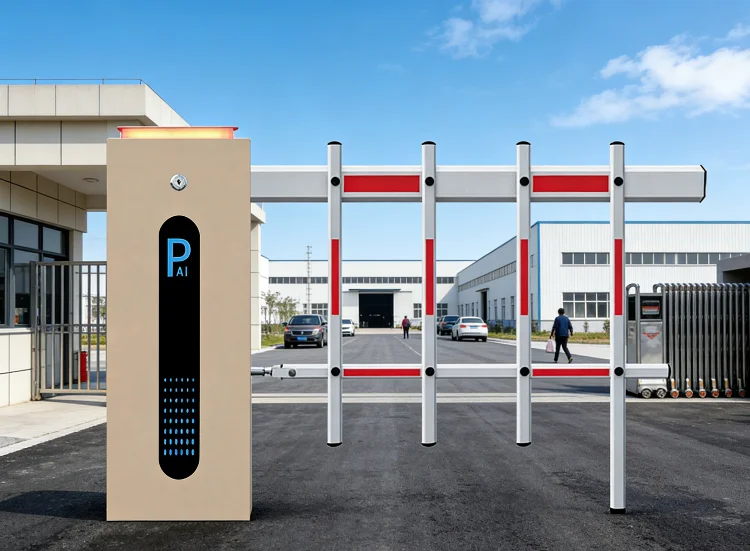
Shipment Coordination
Verified before it leaves, easy to verify on arrival
Each crate is checked against the packing checklist at the factory gate, and the manifest is shared with you before dispatch. The same checklist is used to confirm the shipment on arrival.
Review the equipment that ships in these packages on the product lines page, and confirm MOQ and lead time through the OEM/ODM process.
Verify the factory before you commit
Review production, QC checkpoints and packaging before you order. We answer procurement questions directly.